
Funeral Consultant at Memoria Direct Cremation

Senior Funeral Arranger at Memoria Direct Cremation
Choosing between cremation and burial is one of the most significant decisions a family faces – whether planning ahead or arranging things at a difficult time.
Cost is often the starting point, but it’s rarely the only factor. Religious beliefs, environmental values, the wishes of the person who died, and the importance of having a permanent place to visit all play a part.
What’s the difference between a direct cremation and a burial?
- A direct cremation is the simplest form of cremation. The deceased is collected, cared for, and cremated privately – without a funeral service, mourners, or hearse. The ashes are returned to the family, who can then hold a memorial in their own time and way. It is also known as an unattended cremation.
- A burial involves the body being interred (placed into the ground) in a grave at a cemetery, churchyard, or woodland burial ground. Burials can range from a traditional attended funeral with a full service, hearse, and mourners, to a direct burial where the body is taken straight to the cemetery and buried without a service.
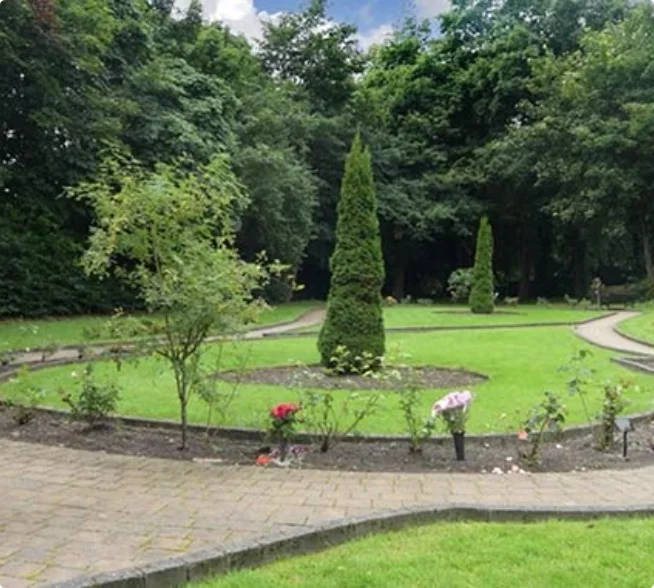
The key difference is what happens afterwards. With cremation, ashes can be kept, scattered, divided, or kept at home. With burial, the grave provides a permanent, physical place to visit, but it comes with the cost of a plot, potential lease renewals, and maintenance. If the idea of a permanent memorial to visit appeals with a cremation, then ashes can also be interred at a crematorium and then a similar costing structure applies. For many people the savings from a direct cremation are well spent on a more lasting memorial such as a rose bush or a ceremonial bench.
Cremation vs burial: what are people choosing?
Cremation has been the dominant choice in the UK for decades, and the shift towards direct (unattended) cremation is accelerating. Here is how the split has changed over the past seven years:
| Year | Attended cremations | Burials | Direct (unattended) cremations |
|---|---|---|---|
| 2019 | 74% | 23% | 3% |
| 2020 | 59% | 26% | 14% |
| 2021 | 57% | 25% | 18% |
| 2022 | 57% | 25% | 18% |
| 2023 | 53% | 27% | 20% |
| 2024 | 55% | 25% | 20% |
| 2025 | 53% | 26% | 21% |
*SunLife Cost of Dying Report 2026. Excludes public health funerals.
Direct cremations have grown from 3% to 21% of all funerals in just six years. Burials have held relatively steady at around a quarter of all funerals. The most notable shift has been from attended cremations (down from 74% to 53%) to direct cremations – reflecting a broader move towards simpler, less costly farewells.
How much does each option cost?
The SunLife Cost of Dying Report 2026 tracks funeral costs across six categories. Here is how cremation and burial compare:
| Funeral Type | Average Cost (2025) |
|---|---|
| Direct cremation | £1,628 |
| Simple attended cremation | £3,518 |
| Traditional attended cremation | £4,200 |
| Simple attended burial | £4,758 |
| Traditional attended burial | £5,440 |
| Direct burial (excl. plot) | £1,628 |
| Direct burial (incl. plot) | £4,002 |
*All figures from SunLife Cost of Dying Report 2026. “Simple attended” = service without hearse or limo. “Traditional attended” = full service including hearse, limo, officiant, flowers.
At every level, cremation is cheaper than burial. A direct cremation costs £1,628 on average – the same base figure as a direct burial, but a direct burial does not include the cost of the burial plot itself, which adds an average of £2,374 and brings the real total to around £4,002.
A traditional attended burial at £5,440 is the most expensive funeral type tracked by SunLife, and this figure does not include the cost of the burial plot which on average is an additional £2,374. Since 2004, the cost of a traditional attended funeral has risen by 146%.
Burial plots: the cost that catches people out
The cost of a burial plot is separate from the funeral director’s fees, and it varies enormously depending on where you live. The SunLife 2026 report found that the average burial plot costs £2,374 – but the range across the UK is stark:
- Northern Ireland: £886 (the lowest cost region).
- London: £4,863 (the most expensive – over 5 times more than the cheapest region).
On top of the initial purchase, most cemeteries charge ongoing lease or maintenance fees. Most plots are purchased for a fixed period (often 25–75 years) rather than in perpetuity, meaning the lease may eventually need to be renewed – at an additional cost.
With a direct cremation, there is no plot to buy and no ongoing fees. This is one of the reasons the total cost of cremation remains significantly lower than burial.

Environmental impact: cremation vs burial
Neither cremation nor burial is entirely without environmental impact, but the carbon footprints are different.
Cremation uses a significant amount of energy – primarily natural gas – and releases carbon dioxide into the atmosphere. A single cremation produces roughly 245kg of CO₂. However, many modern crematoriums have invested in cleaner technology.
Memoria Direct Cremation is part of the Memoria Group which operates crematoria with environmental commitments including electric cremators, mercury abatement, biodegradable urns, and wildlife habitats at several sites.
- Burial avoids combustion emissions, but introduces other concerns. Embalming fluids (primarily formaldehyde, a known carcinogen) if used can leach into surrounding soil and groundwater. Traditional coffins may not biodegrade easily and can contain glues, varnishes, and metal fittings. Cemetery land use is also a growing issue – burial space in some parts of the UK is running out.
- Woodland (green) burial is often considered the most eco-friendly option. The body is laid to rest without embalming, in a biodegradable coffin or shroud, in a natural setting with no headstones. A woodland plot averages £2,207, with a service fee of around £390. 87% of funeral directors have access to a woodland site, and around 6% of funerals they undertake are woodland burials.*
Religious and cultural considerations
For some families, the choice between cremation and burial is guided by faith or cultural tradition. While attitudes have broadened in recent years, there are important distinctions:
- Christianity – most denominations accept both cremation and burial. The Catholic Church permits cremation but requires ashes to be kept in a sacred place (not scattered). The Eastern Orthodox Church does not permit cremation.
- Islam – cremation is forbidden. Islamic tradition requires burial as soon as possible, without embalming, with the body facing Mecca.
- Judaism – Orthodox Judaism requires burial; Reform and Liberal Judaism generally accept cremation.
- Hinduism – cremation is the preferred and traditional practice, believed to free the soul for reincarnation.
- Sikhism – cremation is preferred, though burial is permitted.
- Buddhism – both cremation and burial are accepted; cremation is more common.
If religious practice is important, it’s worth discussing wishes with your family and faith leader early. A direct cremation is a secular service as there is no ceremony at the crematorium – but families can incorporate religious elements into a memorial held afterwards.
How to decide: direct cremation or burial?
There is no universally right answer. The decision depends on what matters most to you and your family. Here are some practical considerations:
A direct cremation may suit you if:
- You or the person who died wanted a simple, no-fuss farewell.
- You’d prefer to hold a personal memorial later, in your own time.
- You want flexibility with the ashes – keep them at home, scatter at a meaningful place, divide between family members, or turn them into memorial jewellery.
A burial may suit you if:
- Having a permanent, physical place to visit is important – many people find a graveside helps with long-term grief and closure.
- Religious or cultural tradition requires a burial.
- The person who died expressed a preference for burial.
- The act of a graveside service – seeing the coffin lowered – is an important part of how you wish to say goodbye. This is the case of an attended burial, however direct burials do not have a service.
It’s also worth knowing that these options are not entirely either/or. Ashes from a direct cremation can be buried in a cemetery plot or interred in a memorial garden, giving families a permanent place to visit without the full cost of a funeral service or burial.
Whether you’re planning ahead or making decisions at a difficult time, the most important thing is that the choice feels right for you and the people you love. There’s no wrong answer – only the one that brings your family the most comfort.
If a direct cremation is right for you or your family, Memoria Direct Cremation can help.
Last reviewed: May 2026.
*Industry statistics sourced from the SunLife Cost of Dying Report 2026
Frequently asked questions
Is cremation cheaper than burial in the UK?
Can I have a funeral service with a direct cremation?
Is a direct burial cheaper than a direct cremation?
Can I be buried in a woodland or green burial site?
How much does a burial plot cost in London?
Why are funeral costs rising?
Last reviewed: April 2026.
*Industry statistics sourced from the SunLife Cost of Dying Report 2026
